Transparency as a Condition for Students' Sense of Belonging
- Alana Sobelman
- Jun 22, 2025
- 2 min read

A November 2024 article from ICEF, drawing on The Ambassador Platform’s survey of prospective international students, offers a nuanced view into how perceptions of institutional fit take shape—often quietly and long before formal engagement begins. The research underscores that students’ decisions are shaped not solely by rankings, cost, or career prospects, but by the early signals they receive about care, inclusion, and recognition. Questions like Will I be understood here? Will I be safe? may be unspoken, but they form an essential part of how students interpret the landscape of higher education options available to them.
The study suggests that belonging is not something conferred at orientation but built gradually over time, through accumulated impressions that begin long before enrollment. 80 percent of respondents expressed a desire for reassurance around safety and fit before choosing where to study, and nearly one in five reported sensing this connection even before submitting their application. In this way, the emotional texture of a student’s early experience becomes their first evaluative frame—often preceding financial considerations.
This finding resonates deeply with TrustED’s broader approach. For us, transparency is not confined to the release of performance metrics or institutional claims; it encompasses the full set of conditions that allow students to imagine themselves within a university community. These conditions include the tone and accessibility of communication, the presence of clear support systems, and the institution’s willingness to show up in small but meaningful ways—whether through a timely message, a flexible accommodation, or a gesture of patience when something is unclear. Such moments do more than inform; they affirm. And in doing so, they build the trust on which any real decision must rest.
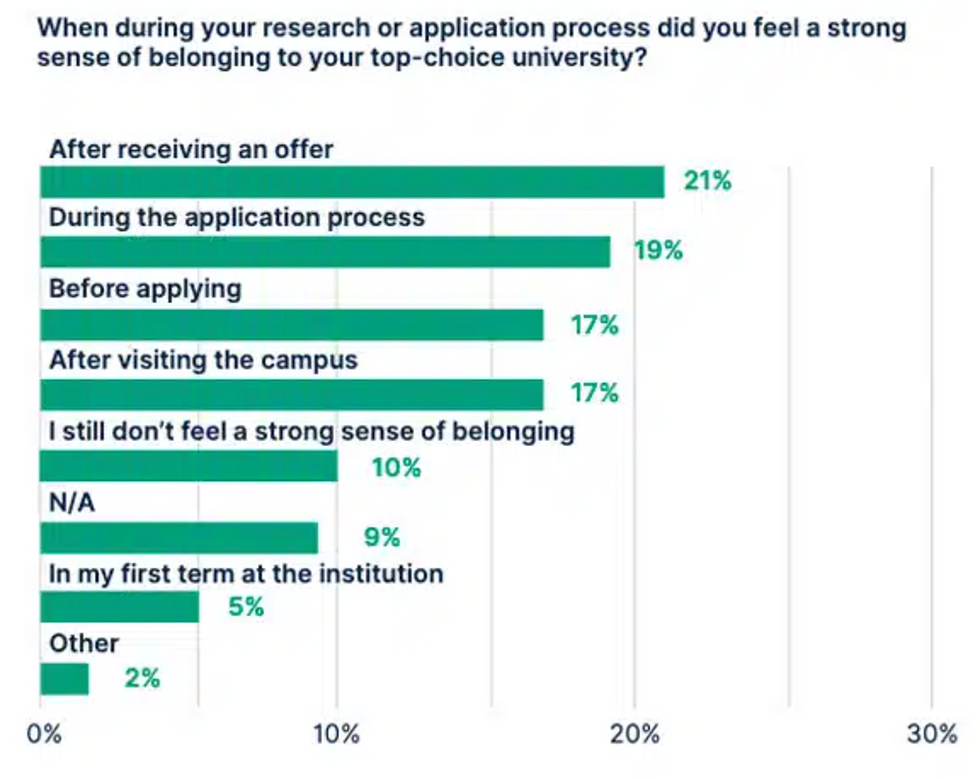
The research also surfaces a more practical shift. Fewer than half of respondents saw university as their default path; many were weighing apprenticeships or immediate employment, assessing each institution not only for its prestige but for its relevance to their evolving goals. In this context, transparency must extend beyond price and admission criteria to include post-study outcomes, safety infrastructures, and the texture of student life. These dimensions matter not just for reassurance, but because they allow students to take ownership of their choice—to see it as a deliberate act aligned with their broader aspirations.
This is where TrustED’s work becomes essential. By developing tools and frameworks that measure both structural clarity and student-reported experience, we aim to make visible the environments in which trust—and by extension, belonging—can take root. Our research, collaborative work, and emerging Transparency Index are all designed to surface the information students are most often denied: not just what a university offers, but how those offerings are delivered, experienced, and sustained.
In the end, transparency is not only a matter of policy or reporting (though these are no doubt highly critical aspects)—it is an atmosphere. It creates the conditions in which students can shift from passive recipients of information to active participants in making choices about their futures. And when that shift occurs, the decision to enroll becomes more than a transaction. It becomes an act of agency.


Comments